South Florida · Element Journal
Beach nails: what to choose when sand and salt water are part of the plan
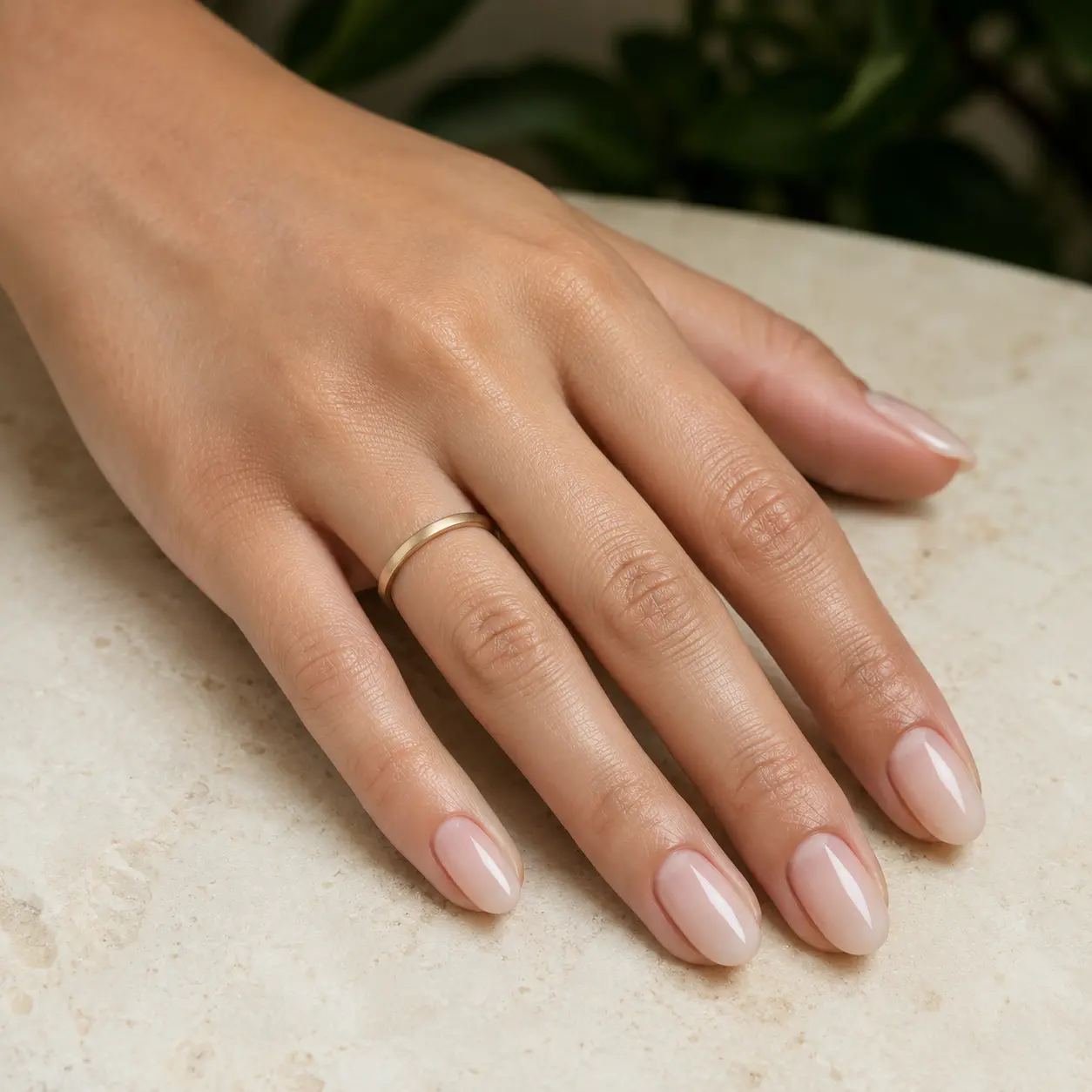
For beach nails that last, choose a short to medium length, a strong base like gel or dip, and a color that hides sand and small chips. Save the longest, thinnest tips for days when you will stay dry.
Choose a length that can take a wave
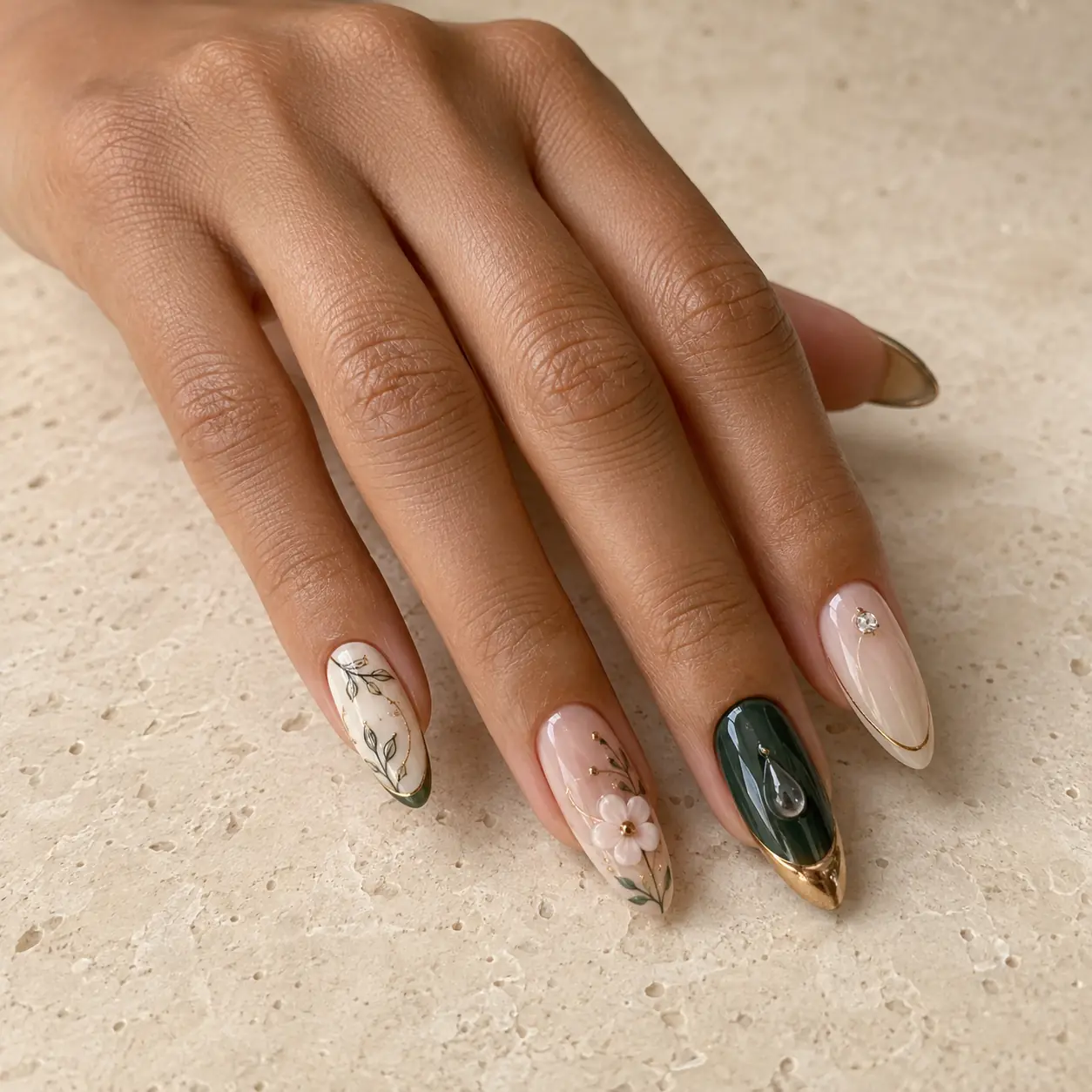
Sand and water are rough on nails. Long, pointed tips can snag in towels, bags and wet hair, and a nail that is soft from a long swim will bend more easily than a dry one. Short or medium squoval, round or soft almond are the safest picks. If you want length, ask for a strong extension, and expect to take a little more care of it.
Think about what you will actually do. A sunbathing day with a book is easy on nails. A day of volleyball, paddle boarding, shelling and digging in a beach bag is hard on them. Match the length and strength to the activity, and keep a small file in your bag in case a nail snags.
Colors that hide the mess
Sheer pink, seaglass, peach and soft white show less sand and fewer small chips than a flat black or deep red. Glitter and shimmer are also forgiving, since they break up the surface. A light color with a tiny bit of shimmer looks pretty in bright sun and does not demand a perfect surface. If you want drama, add a design on one or two nails instead of all ten.
Another good beach option is an ombre or sheer fade. The color is strongest at the tip and softer at the base, so grow-out and chips are less obvious. Another is a small cluster of tiny dots or a thin line. Simple art stays neat after sand and sun and does not need to be perfect.
Designs that look like the beach
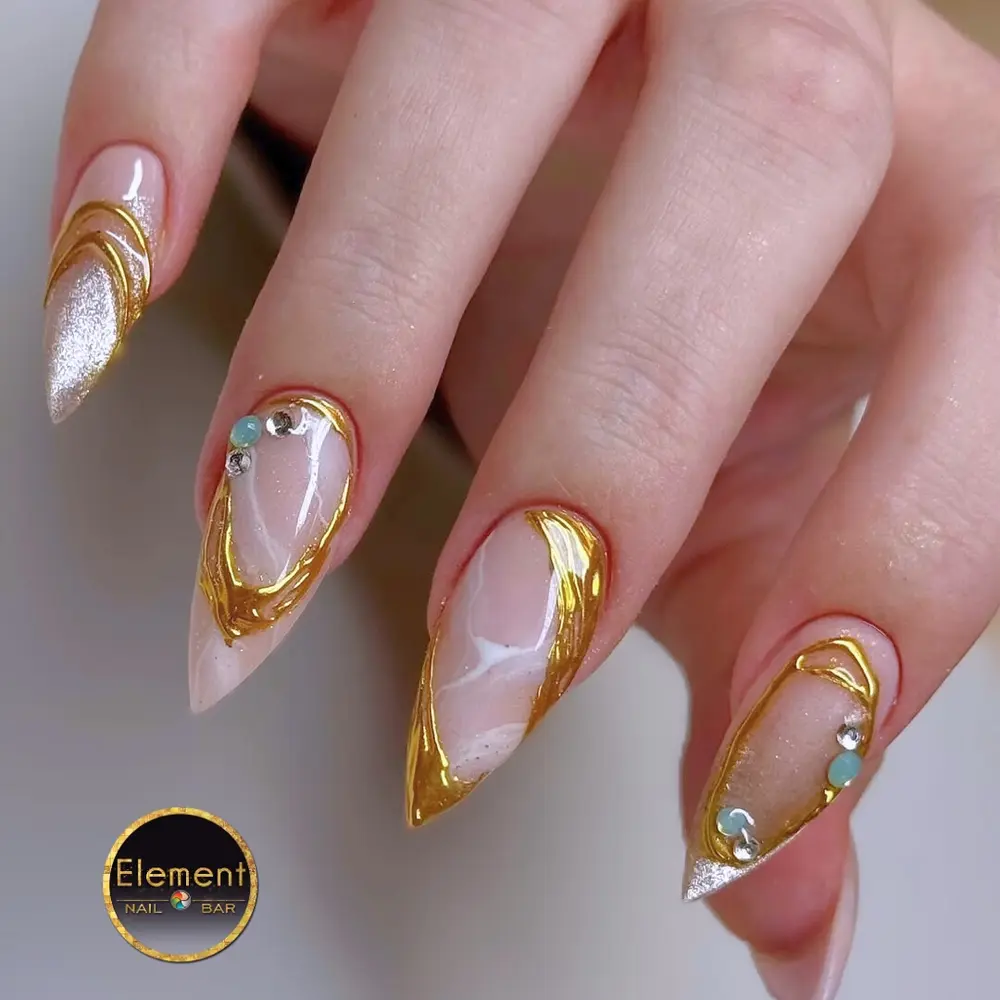
Small shell outlines, tiny waves, a thin line of sea blue or a single sun are easy beach designs. Marbled sea-glass swirls look good in gel and sit under the top coat, so they hold up well. A thin gold line or a tiny charm-free pearl effect gives a little glamour for an evening on the sand. Design add-ons start at $10+ at Element, and your tech can suggest what will last.
If you want a theme, think about the colors of the water more than literal shells. Seaglass green, pale aqua and a sandy beige look pretty together on different nails. A single deep navy nail can look like the ocean at dusk. Subtle designs like these also go with more outfits than a cartoon-style beach picture does.
Care before and after the water
Rinse your hands in fresh water after the sea or pool, dry them well, and use a little cuticle oil. Salt and chlorine can dry the skin around your nails and dull a glossy finish. Wear gloves for chores, and do not use your nails to open things on the beach. If a nail lifts or snaps, come in and have it fixed instead of pulling at it. Services start at $60+ for color acrylic, $65+ for dip, $70+ for builder gel and $75+ for Aprés Gel-X.
Do not forget sun protection for your hands. Sunscreen on the backs of your hands is a good habit, and it is worth wiping your nails off with a towel afterward so oils do not sit on the polish. Plan a fresh top coat or a fill every few weeks if you are at the beach often.
Questions guests ask
Is it OK to swim with gel or acrylic nails?
Yes, in general. Gel and acrylic are made for everyday life, including water. Rinse afterward, dry your hands and check that no nail has lifted at the edge. Lifting can let water in, so have it fixed early.
What nail shape is best for the beach?
Short to medium squoval, round or soft almond. They have fewer sharp corners to snag on towels, bags and wet hair, and they handle a day of swimming and carrying things better than long, thin tips.
Should I get my toes done before a beach trip?
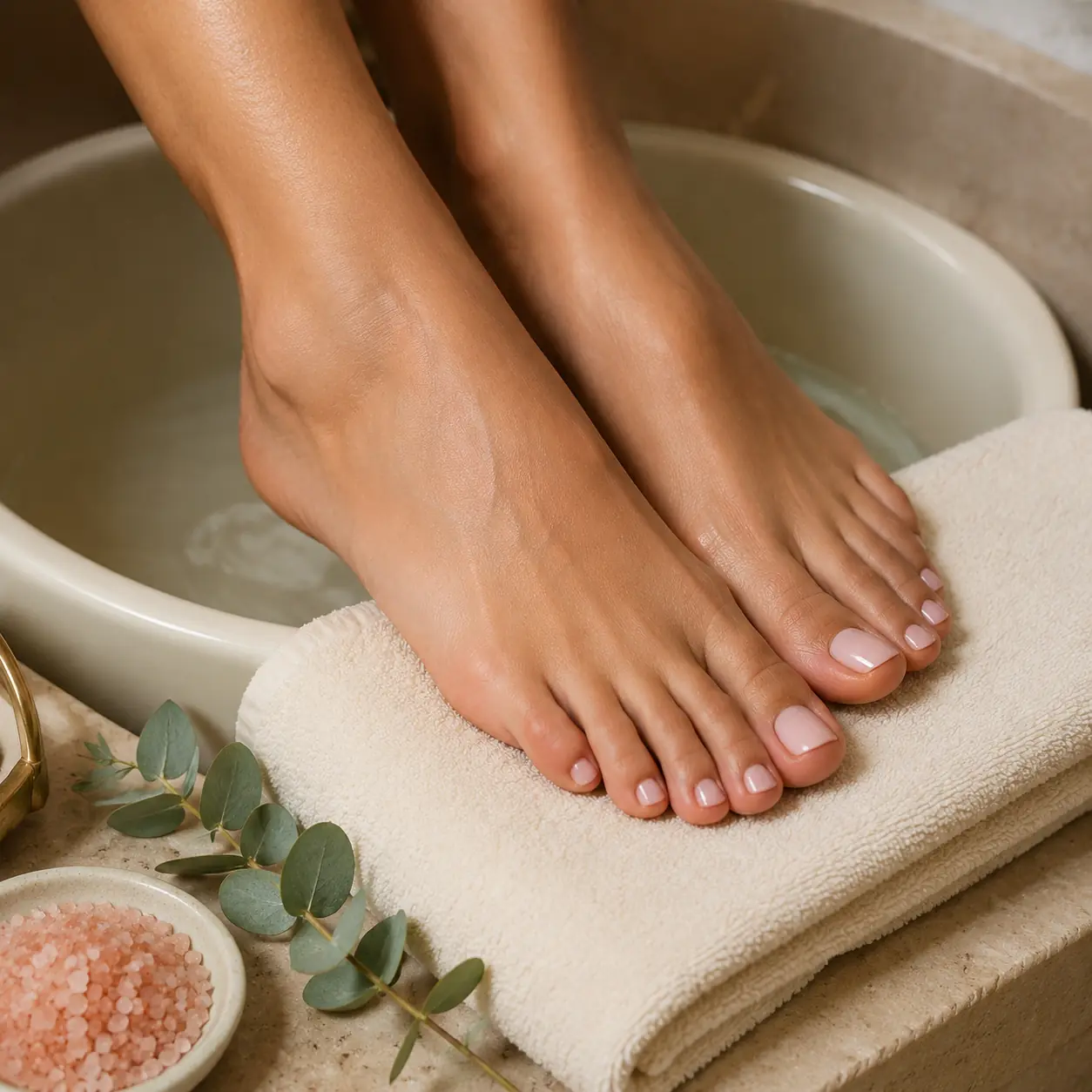
Many people do, since sandal season is toe season. Book a day or two before your trip so the polish is settled, and see our pedicure guide for timing, sand and shaving advice.